Despite the rise of social, chatbots, and AI tools, one channel still leads the nurturing game is email lead nurturing. Emails remain the most reliable way to connect directly with your audience, build trust, and move leads through the buying journey. The problem? Many marketers misuse it by turning potential relationships into spammy noise.
The secret lies in creating automated email workflows that educate, engage, and convert without overwhelming your subscribers. Done right, email lead nurturing becomes your most powerful long-term relationship builder.
“Email is not about frequency. It’s about relevance.”
Why Email Still Rules the Nurturing Game
Even in 2025, email marketing drives an average ROI of $42 for every $1 spent (DMA Report). Why? Because it’s direct, measurable, and permission-based.
Email lead nurturing allows you to:
- Reach leads in a personal environment, their inbox.
- Automate consistent, timely touchpoints.
- Segment audiences based on intent and engagement.
- Guide each lead toward the next logical action.
Unlike social media, your email list is your asset and not just algorithm’s.
The Anatomy of a Perfect Email Workflow
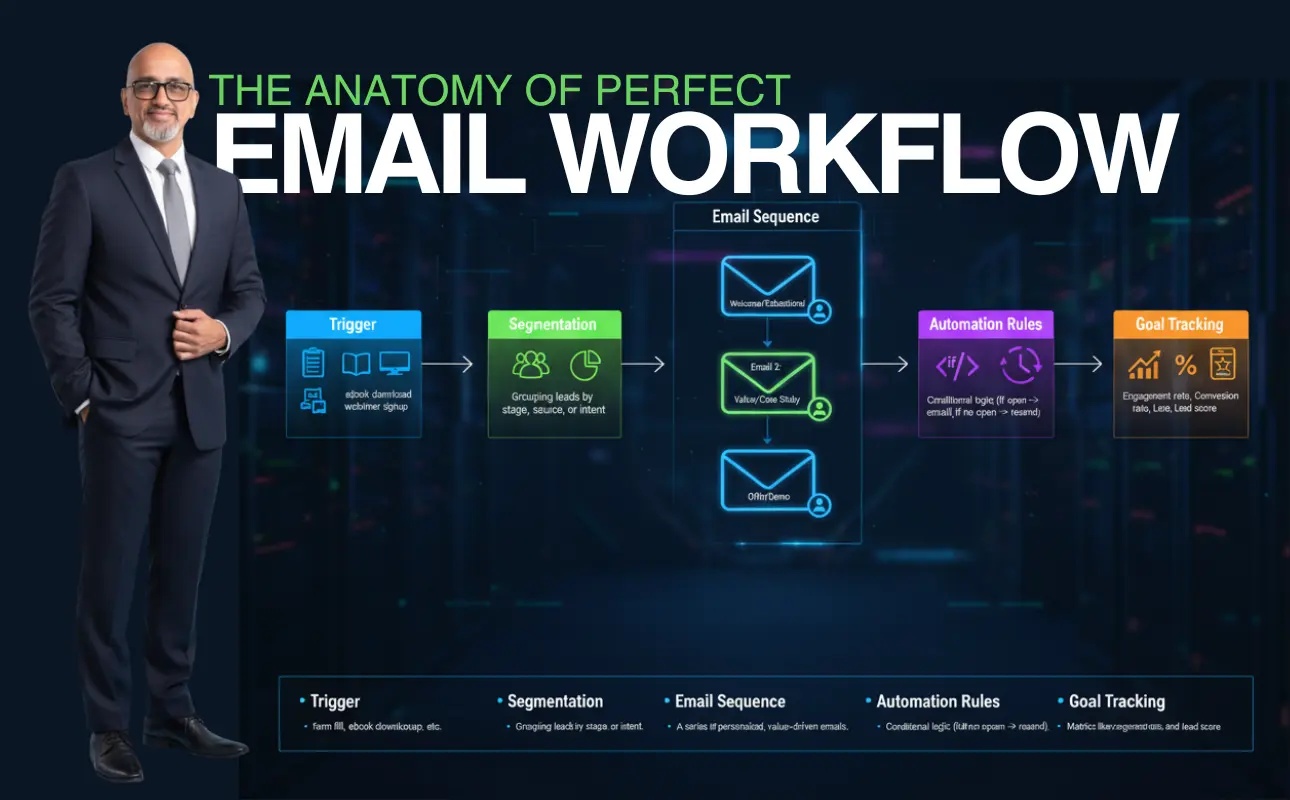
A workflow is not just a sequence of emails, it’s a structured narrative designed to guide leads naturally through the funnel.
Here’s what every successful email lead nurturing workflow includes:
- Trigger: What starts the workflow (form fill, ebook download, webinar signup, etc.)
- Segmentation: Grouping leads by stage, source, or intent.
- Email Sequence: A series of personalized, value-driven emails.
- Automation Rules: Conditional logic (if open → next email; if no open → resend).
- Goal Tracking: Metrics like engagement rate, conversion rate, and lead score.
The goal? Create a rhythm that feels conversational and not mechanical.
Types of Email Workflows That Work
1. Welcome Series
Your first impression sets the tone. A welcome workflow introduces your brand, values, and resources.
Example sequence:
- Email 1: Welcome + thank you
- Email 2: Who we are + what we do
- Email 3: Helpful resources (blog or guide)
- Email 4: Subtle CTA to engage (free consultation, follow on LinkedIn)
“A well-crafted welcome series can increase long-term engagement by 33%.”
2. Educational Nurture Series
Educate your leads before selling. Provide actionable insights around their challenges.
Example sequence:
- Email 1: Identify the problem
- Email 2: Share how-to tips or strategies
- Email 3: Case study or testimonial
- Email 4: Invitation to webinar or demo
3. Re-Engagement Campaign
Rekindle interest with leads that went cold.
Example sequence:
- Email 1: “Still interested in [topic]?”
- Email 2: New offer or resource update
- Email 3: Survey or feedback request
- Email 4: Final chance email before list cleanup
4. Post-Purchase or Client Onboarding
Nurturing doesn’t stop at conversion. A smooth onboarding workflow builds loyalty and retention.
Example sequence:
- Email 1: Welcome aboard
- Email 2: Quick-start guide
- Email 3: Pro tips + resources
- Email 4: Feedback or testimonial request
Writing Emails That Feel Personal (Even When Automated)
Automation doesn’t mean losing authenticity. The key to email lead nurturing success is writing like a human and not a marketer.
1. Personalize Beyond the Name
Use behavioral data like past interactions, downloads, or interests to tailor messages.
2. Keep It Conversational
Write as if you’re talking to one person. Avoid jargon or generic lines like “Dear Customer.”
3. Deliver Value in Every Email
Each message should answer: “What’s in it for the reader?” Provide quick wins, not long lectures.
4. Design for Readability
- Short paragraphs (2–3 lines max)
- Clear CTAs
- Visual breathing room
- Mobile-friendly layout
“People don’t read emails, they scan for value. Make it easier for them to find.”
Avoiding the Spam Trap
Over 45% of global email traffic is spam. To ensure your email lead nurturing campaigns don’t get lost, follow these best practices:
- Authenticate: Set up SPF, DKIM, and DMARC to protect your domain.
- Segment: Don’t blast all leads with the same content.
- Test Timing: Use analytics to discover your best send times.
- Maintain Clean Lists: Regularly remove inactive or bounced emails.
- Avoid Spam Triggers: Skip phrases like “Act now!” or “100% free.”
Also, give leads easy unsubscribe options, respecting choice builds long-term trust.
Using Lead Scoring to Personalize Email Flows
Lead scoring assigns a value to each lead based on behavior, engagement, and demographics.
Integrating lead scoring with email lead nurturing ensures that your messages match a lead’s readiness.
Example:
- Score 0–25 → Awareness sequence
- Score 26–50 → Consideration sequence
- Score 51–75 → Decision sequence
- Score 76+ → Sales-ready follow-up
Dynamic workflows automatically adjust based on engagement, creating adaptive journeys without manual intervention.
Measuring Email Workflow Success
The success of email lead nurturing isn’t just about open rates. It’s about the actions leads take and how consistently they move through your funnel.
Track These Metrics:
- Open Rate: Measures subject line performance.
- Click-Through Rate (CTR): Indicates content relevance.
- Conversion Rate: Reveals the effectiveness of your offers.
- Unsubscribe Rate: Reflects trust and message fatigue.
- Lead Score Growth: Shows if nurturing increases readiness.
Use these insights to refine sequences, test content, and continuously improve delivery timing.
How AI Enhances Email Nurturing Workflows
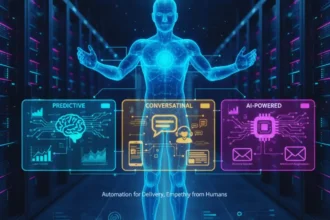
Artificial intelligence has revolutionized email lead nurturing by automating personalization and predicting outcomes.
AI Can Help You:
- Predict the best send time for each subscriber.
- Suggest the next content piece based on behavior.
- Identify at-risk leads through sentiment analysis.
- Automatically rewrite subject lines for higher open rates.
“AI optimizes delivery, but empathy drives response.”
AI tools make it possible to scale personal experiences but it’s your strategy and tone that create emotional connection.
Common Mistakes in Email Nurturing
- Over-Automating: Too many workflows can feel robotic and impersonal.
- Ignoring Data: Not testing subject lines or sequences means missed optimization opportunities.
- Selling Too Soon: Lead nurturing is about trust, not transaction.
- Neglecting Mobile Users: Over 70% of emails are read on mobile — optimize accordingly.
- Inconsistent Tone: Keep voice and messaging aligned with your brand personality.
“Automation without empathy is just digital noise.”
Bringing It All Together
Email lead nurturing remains the most reliable and cost-effective way to build meaningful customer relationships.
When you combine smart automation with authentic communication, you transform inboxes into growth engines.
Focus on relevance over reach, and you’ll never need to “blast” emails again — your leads will actually look forward to hearing from you.
“Great nurturing isn’t about sending more emails. It’s about sending the right ones, at the right time, and to the right audience.”