The marketing world is changing faster than ever. As technology evolves and customer expectations rise, the future of lead nurturing lies in one direction hyper-personalized, predictive, and human-like experiences powered by AI.
In 2025 and beyond, nurturing won’t be about sending campaigns, it’ll be about orchestrating conversations. Brands will shift from reactive communication to predictive interaction, anticipating what leads need before they even ask.
“The future of lead nurturing is not automation alone, it’s anticipation powered by artificial intelligence.”
This article explores how AI, conversational tools, and emotional intelligence will redefine lead nurturing for the next decade.
From Funnels to Flywheels: The Evolution of Nurturing
The traditional marketing funnel from awareness to conversion is becoming outdated. In the future of lead nurturing, businesses will adopt a flywheel model, where customer engagement continuously fuels new growth.
The Flywheel vs the Funnel
| Model | Focus | Limitation | Future Advantage |
|---|---|---|---|
| Funnel | Linear path from lead to sale | Ends after conversion | Short-term relationship |
| Flywheel | Continuous cycle of attract–engage–delight | Ongoing engagement | Builds loyalty and referrals |
The flywheel puts customer experience at the center of marketing — not at the end. That’s the new foundation of sustainable nurturing.
The Rise of Predictive Lead Nurturing
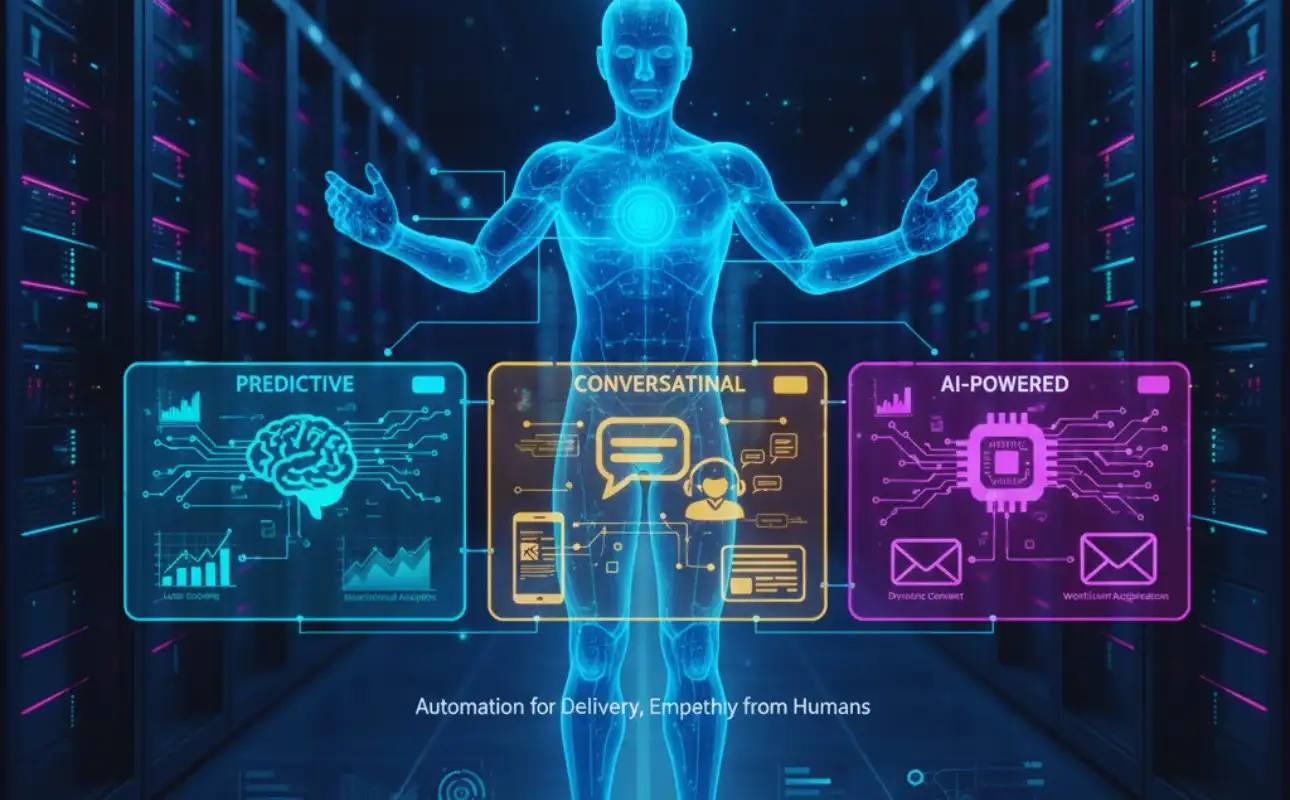
The future of lead nurturing is predictive, powered by machine learning and data-driven foresight. Instead of reacting to actions, predictive systems anticipate them.
What Predictive Nurturing Looks Like
- AI identifies which leads are most likely to convert soon.
- Algorithms recommend optimal content for each segment.
- Predictive scoring updates in real time as behaviors evolve.
- Campaigns self-adjust based on user intent, not marketer schedules.
“Predictive nurturing replaces guesswork with guided action.”
Benefits of Predictive Systems
- Faster response times
- Higher conversion velocity
- Improved marketing-to-sales alignment
- Reduced drop-offs from disinterest
Imagine your system knowing when a prospect will be ready to buy before even they do. That’s where predictive AI takes you.
Conversational AI: The Human Face of Automation
The next era of lead nurturing will be conversational, not broadcast-based.
Instead of waiting for leads to fill out forms, brands will nurture them through interactive, two-way conversations powered by chatbots and virtual assistants.
Conversational AI in Action
- Chatbots qualify leads, answer queries, and schedule demos 24/7.
- AI-powered assistants remember past interactions to continue context-rich dialogues.
- Voice-based nurturing through smart speakers or in-app audio interfaces enables more natural engagement.
“Leads don’t want to fill forms but they do want to feel heard.”
Conversational AI doesn’t just increase efficiency; it restores humanity to automation.
Hyper-Personalization Through Real-Time Data
In the future of lead nurturing, personalization will evolve from segmented messaging to individualized experiences.
What’s Changing
- Static workflows → Dynamic journey orchestration
- Batch emails → Adaptive content delivery
- Periodic follow-ups → Real-time engagement
With unified CRM systems and AI data models, every interaction becomes context-aware.
For instance, when a lead reads your pricing page, an email with ROI case studies could trigger instantly or your chatbot could offer help right away.
Example Flow
- Website Visit → Predictive system identifies interest in a topic
- Trigger → Email or message with related success stories
- AI Analysis → If engaged, offer consultation; if ignored, retarget gently
“The next phase of personalization is precision and not just knowing who they are, but what they need now.”
The Role of Emotional Intelligence in Automated Nurturing
As automation scales, empathy becomes the differentiator. Future AI systems will blend emotional and predictive intelligence by reading not just data, but tone, sentiment, and intent.
Emotionally Intelligent Nurturing Includes:
- Sentiment analysis to detect frustration or excitement
- Adaptive tone by adjusting formality or warmth dynamically
- Emotion-based timing by reaching out when leads are most receptive
This integration of emotional AI ensures that every interaction, even if automated, feels human, timely, and meaningful.
“Emotion is the new algorithm.”
Data Privacy and Ethical Automation
The future of lead nurturing depends on trust. As personalization deepens, transparency must follow.
Ethical Nurturing Practices of the Future
- Consent by Design: Privacy preferences baked into every workflow.
- Explainable AI: Systems that reveal why they took a particular nurturing action.
- Minimal Data, Maximum Relevance: Collect less but use it better.
- Self-Service Privacy: Let users edit, delete, or pause nurturing any time.
Sustainable success will come from brands that nurture responsibly and those who understand that compliance isn’t a checkbox, it’s a relationship-building principle.
The Integration of Voice, Video, and Micro-Content
Tomorrow’s nurturing will not rely only on email or chat. The future of lead nurturing will span across voice-driven devices, video automation, and snackable content formats.
Future-Ready Formats
- Voice: Smart replies and lead nurturing through Alexa, Siri, or in-app assistants.
- Video: Personalized explainer videos triggered by behavior or segment.
- Micro-Content: Bite-sized content in chat or notifications for quick insights.
These formats reduce friction and make nurturing feel natural conversational, not corporate.
“In the future, attention is earned through interaction, not interruption.”
Unified Platforms and AI Marketing Clouds
The coming wave of martech innovation is consolidation. Fragmented tools will merge into AI marketing cloud platforms that handle everything from content creation to conversion tracking within one ecosystem.
Imagine a unified dashboard where AI predicts next-best content, auto-generates personalized messages, and syncs analytics in real time.
This will make lead nurturing not just scalable but self-optimizing.
Key Metrics That Will Define Future Success
As nurturing evolves, so must measurement. Traditional KPIs like “open rate” or “CTR” will fade, replaced by more dynamic indicators.
Future-Ready Metrics
| Metric | Description |
|---|---|
| Engagement Intent Index (EII) | Measures genuine interest, not just interaction |
| Predictive Conversion Probability | Forecasts the likelihood of purchase or upgrade |
| Sentiment Health Score | Tracks emotional tone in conversations |
| Journey Completion Rate | Monitors how many leads finish a nurturing path |
“Tomorrow’s marketers will measure meaning, not just movement.”
Preparing for the Future of Lead Nurturing
Here’s how brands can start future-proofing their nurturing strategy today:
- Adopt Predictive Tools Early: Use AI-based CRMs or platforms like GoHighLevel for lead scoring and automation.
- Focus on Data Quality: Train your AI with clean, relevant data.
- Design Conversational Journeys: Replace long forms with dialogue-based interactions.
- Build for Privacy: Make consent and transparency integral, not optional.
- Keep the Human Touch: Use automation for delivery and not empathy.
“You are the storyteller and AI is the tool that should be used as a lever.”
Bringing It All Together
The future of lead nurturing is the harmonious integration of human intelligence, artificial intelligence, and marketing automation tools. A world where empathy is scaled by automation, and decisions are powered by data but guided by emotion.
When personalization feels natural, conversations feel authentic, and nurturing feels like service, that’s the future every brand should aim for.
“The best lead nurturing would feel more like understanding your customers and not like marketing at all.”